A Life Without »Why« –
An Attempt at a (Brief) Introduction to Reiner Schürmann's Thought

This is a English translation of an article I wrote that hasn’t found a place to be published, except for a blog in Swedish that no one reads, so for now its new home is here, on Substack.
How to speak my freedom, my surprise, at the end of a thousand detours: there is no bottom, there is no ceiling.
-Rene Char
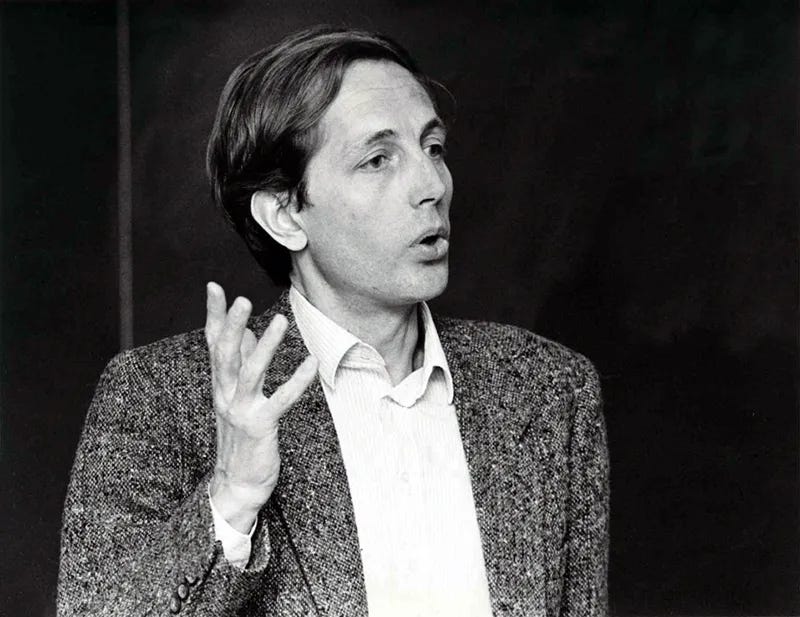
More often than not, when we seek to explain why we do what we do, we refer to some principle. Throughout history, the specific principle has varied: Nature in antiquity, God in the Middle Ages, the Subject in modernity, and so on. Action has thus been grounded in being. Today, a person might answer such a question by saying that they did what they did because it made them happy or that they were aiming at achieving some other goal. Consequence reigns supreme, but always with reference to the self on which the answer is based and which thus acts to achieve a specific goal it has set for itself. According to this practical teleology, action is understood as being dominated by an idea of finality. We thus have arché—the principle or foundation—and the goal, its telos, that is, the why. Life is thus defined as having a why. What would a life without a why entail? A life without any enduring principles—whether Self, God, or Nature—to refer to in order to explain why we do what we do or do not do? Such a deconstruction of the end, and thus also of the modern subject, is what is at stake in the philosophical archaeology of the Dutch-born philosopher Reiner Schürmann (1941–1993), which consists of an original synthesis of Immanuel Kant’s philosophy and Martin Heidegger’s thought.
Reiner Schürmann was a philosopher at the New School for Social Research in New York and is best known for his book Heidegger on Being and Acting: From Principles to Anarchy (1987) and the posthumously published Broken Hegemonies (2003). He was born in the Netherlands to German parents and studied philosophy and theology in Paris. He lived in Germany, Israel, and France before coming to the United States in 1971 as a Dominican priest, but soon left the priesthood to teach philosophy at the aforementioned New School for Social Research in New York. There, he came under the tutelage of Hans Jonas and Hannah Arendt.
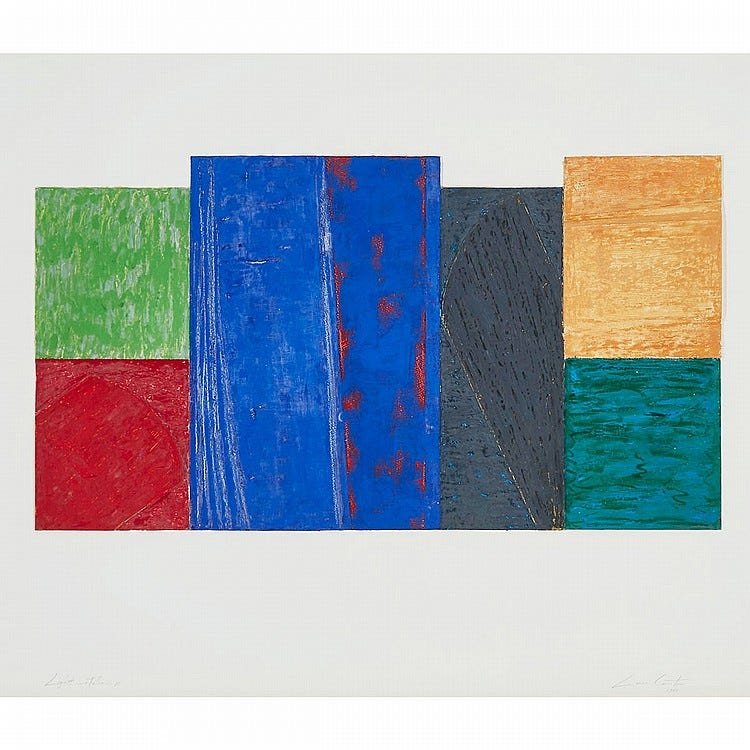
The fact that he moved around a great deal is a detail of some significance for the interpretation of the history of philosophy he would go on to develop. Vittorio Hösle emphasizes that Schürmann’s philosophical life must be understood in relation to the time and place of his birth, but that one should further add that Schürmann experiences this as atopos. Schürmann lives a wandering life, drifting, without any real ties or roots, and trained himself to live what he calls a »life without why«. Of course, he had real connections, such as his partner Louis Comtois (1945–1990), the Canadian artist. A life without why rather means: living on the threshold, or, more in line with Schürmann’s terminology, in the »transition« between different worlds. What worlds is he living between? After the war and before the war, of course, but for him it is above all about living between a principled epoch and an anarchic one.
Schürmann’s thinking about a life without “why” can be said to take its starting point in the Greek concept of arché and its original Aristotelian meaning as both the beginning of something and the governing principle of that something. In modern terms, this means that the subject is the arché that initiates something and determines how it should be; and according to this framework, action is grounded in the conscious subject. We act in certain ways to become happy, successful, and so on. He calls these principles, which have governed throughout various eras, »historical a priori«.
According to Schürmann, we are living in an era characterized by a waning faith in these principles that have guided our thinking. One consequence of this waning faith in the principles that have governed how we understand what is and what we should do is an increasingly intense production of various forms of principles, which today is occurring not least through the creation of legal ones (more and harsher penalties, abortion bans, no excuse-schools etc.). These principles have served as first principles that both initiate something and determine how that something should be. That is why they are historical a priori. They initiate an epoch and then reign throughout it.
As I mentioned, Schürmann goes back to Aristotle’s description of the concept arché, where it takes on the meaning of both origin and governing for the first time. He will later call the principles »phantasmatic hegemonies«, in whose name one acts and behaves. This is why one can say that action derives from being. The individual “subject,” the singular existence, is called into this whole as a part and thereby becomes particular and acquires an identity; instead of being singular and in that movement the common is eradicated. What a life without a why entails is the vindication of the singular life by living according to an origin without a why—that is, without governance.
Politics will therefore serve as a good example. According to Aristotle it is anarchic from the outset: since everyone (except slaves etc.) is equal, and we therefore have a form of democracy. It is well known to anyone who has taken an introductory course in philosophy that philosophy responds to this anarchic character of politics, which they believe characterized democratic Athens. One way to look at it is that philosophy, as we understand it today, begins precisely with a reaction to anarchy as a certain understanding of democracy. We see this, for example, in the second half of Aristotle’s Politics, where this becomes a problem for him and an artificial distinction is established—some are simply better suited to rule and others to be ruled. Schürmann points out that this inequality becomes constitutive of politics, since, according to Aristotle, we would otherwise end up in anarchy, where the weak control the strong. Here, the politician appears as the captain of a ship, gazing up at the sky and steering according to the ideas represented by the stars above. Theory thus guides practice and thereby provides a »why«. An archaic, epochal economy, according to Schürmann, in which we live according to principles rather than without them—hence, in accordance with the presence of being, which would constitute an an-archaic economy.
Schürmann has nothing against principles per se, and even posits an anarchic one that highlights how all principles are, from the very beginning, heteronomous and riddled with contradictions. This, in turn, has led philosophers to attempt to reinforce them. He describes this as an escape from death’s singularizing power. One way of looking at it is that life (»natality«) clings on by forcing the singular into the common as identity/particular, simply by refusing to accept death. We cannot escape this »double bind« between life and death, but the former has been allowed to reign supreme. This becomes clear in how Foucault describes biopolitics, where politics no longer merely governs communal life in the city but de facto ensures that life is sustained. The state keeps us alive by controlling our physical and mental health. Thus, for Schürmann, anarchy consists of two principles, life and death, but where the former has been allowed to reign at the expense of death’s singularizing power. One way to put it, then, is that philosophy’s classic maxim “learning to die in order to live” needs to be radicalized within the anarchic subject.
However, as mentioned, every principle carries within it its own negation; life will give way to death, and finitude cannot be escaped. This, however, has not deterred philosophers from trying; Leibniz argued that we need a principle stronger than God—a principle of reason. He asserts that nothing is without a principle, but this principle—which is stronger than God—has no principle of its own, so the principle is groundless and thus carries within itself its own cessation—there is simply no foundation. It’s the same in politics, as Schürmann points out: the principle is anarchic (everyone is equal and different), so it is only through an artificial “why” that this equality—or inequality, such as dominance—can be established within the collective.
Following in Foucault’s footsteps, people today speak of a liberal »governmentality«, but as we mentioned earlier, we also have an increasingly active legal apparatus that is engaged in what might be described as an intensive production of laws. What can we do to counter this? Should we place ourselves outside all norms? Create new ones? Is it a matter of a life that turns its back on and places itself outside norms, or should we perhaps experiment and play with the norms that exist? According to Schürmann, we live in a time and place that allows us, in practice, to question the very act of placing our lives within such a system.
What, then, does an anarchic subject do? As we mentioned at the outset, for Schürmann this cannot mean transgressing the law, since that would amount to fetishizing it by daring to do the forbidden (he thus does not seem, unlike Agamben and Deleuze, for example, to see anything radical in perversion). The anarchic way is rather, as Schürmann quotes Nietzsche in Thus Spoke Zarathustra: »‘This—is now my way—where is yours?’ Thus did I answer those who asked me »the way«: For the way—it doth not exist.« It is about developing one’s own way in life and one’s own way of acting, which is precisely »wandering« and »without a why«. To the extent that the struggle is directed, it is not directed against power as such, it is rather singular and tactical, directed against specific organizations of power and specific discourses, as well as specific forms of subjectivation.
In more philosophical terms, living without a “why” means living under the imperative of »Gelassenheit« (letting be), in harmony with the erosion of principles—which means living with that erosion and letting go of the principles that give us comfort. To live in harmony with truth as it speaks, Schürmann would say. Here we might be tempted to ask, “Why?” But to understand, that what is, is a »play without a why«, one must live without a why—and to understand »Gelassenheit«, one must be »unburdened«. Practice thus precedes theory—the fact that the principles crumbles means that this theoretical “why”—the historical a priori principles, the reasons we give for our actions—gives way to a »practical a priori«: to live without a why. It may sound abstract, but as Schürmann writes in his biography: he still dreamed of SS soldiers in front of a building—how they are shooting, with machine guns and grenades—but notes that he no longer asks why, as he is instead training himself to live without such questions. Further, for him, an important aspect of living without »why« is that it involves a dwelling in language, where René Char’s poetry serves as an example. Perhaps there is something here for today’s therapy rooms, in how we can address both experienced and inherited trauma? To put it more bluntly: poetry and creativity, rather than delving into childhood.
In some sense Schürmann undeniably points toward a political stance; in one text, he refers to direct democracy as what a critique of Western metaphysics might lead to, since the consequence of metaphysics is contract theories and social contracts—simply put, the mechanisms underlying representative democracy. But it is also, following Heidegger, a phenomenological existential description of ontological anarchy as a way of life. This may have radical political consequences, but Schürmann himself does not elaborate on them. On the one hand, we might argue that this is not the philosopher’s role, but on the other hand, if we follow Schürmann, this distinction between politics (praxis) and philosophy (theory) no longer holds—and thus the philosopher cannot withdraw. But the question is: what does it actually mean to live? How do we live without a »why«? The question is, however, not what this life is, but how it can be. Potentiality, always changing.
Schürmann’s aim is to drive what remains of the West’s idols into the grave, to wean us off the desire to codify our existence—that “why” I have mentioned, which allows us to avoid doubt and overly drastic changes—in principle, as Schürmann writes, everyone does pretty much the same thing. Such an ethics does not offer us a new and bright era, but concerns how we can inhabit—the ethos—our own time and language. It is a liberation from the self that »guards experience«—to abandon oneself and let the world be is the only asceticism that remains. Does anarchism, then, imply lawlessness? Not according to Schürmann, for what constitutes the law is nature in its ancient sense of phuein—the constant, unstable manifestation of whatever passes before our attention (thus, through archaeology, he has returned to the ancient principle and shown how it is in fact precisely an »anarchic principle«, Le principe d’anarchie, as the French title of the book on Heidegger reads). To do nothing, other than linger with whatever reveals itself in a given situation, and here, as the detached always do, bid farewell. Everything is fleeting and lasts, at the most, a moment. There is therefore no point, according to Schürmann, in demanding a new era, since it will inevitably »stink«, and he writes: »No tomorrows, but a today effervescent with levity. So that I can look this arbitrary past in the eye, without floundering.« (Schürmann, Origins, 238)
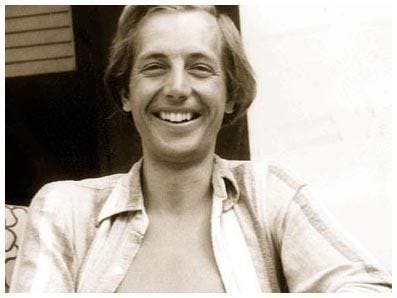
I mentioned, above, the terms »ontological anarchy« and an »anarchic principle«, which implies a certain paradox, which highlights the transition between an epoch governed by principles (ontological arché) and an anarchic »epoch« (ontological an-arché), a movement he is fond of comparing to the shift from Plato to René Char’s poetry: from logos—the human being who declares what is and how it is—the rational human being who draws a line around himself to which everything that exists must conform—to an »archipelagic discourse« and a »pulverized poem«. Placing principle and anarchy side by side is precisely a way of preparing for this »transition«, but as he says, he isn’t waiting for a new epoch, which, as he points out, will also be a drag; for him, living without a »why« means living in the transition, in the transformation—even the new becomes a time of transition, and it is about embracing it by living without a »why,« from one transition to another, and letting the world be. Which means to lose oneself in language through an archipelagic discourse and a fragmented poem, not to state what is and how it is. Just as Foucault’s »human«, written in the sand, is washed or blown away, »we« are swept away the very moment we are written down. All that remains is to say goodbye.
Schürmann was perhaps not an »activist« philosopher and would not go so far as to say that philosophy aims to change the world—a claim that must, of course, be understood in relation to the principles that have governed Western metaphysics and culture, in whose name philosophers have assumed the role of »servants to all of humanity« (they have had quite a burden on their shoulders, the philosophers, as he comments somewhat ironical on the role). Just as the poet does, an anarchic subject—the »philosopher«—does not hold onto what he finds, but, as Char writes (in Mary Ann Caws translation): »The poet does not retain what he discovers; having transcribed it, he soon loses it. In that resides his novelty, his infinity and his peril.«. This may be what it means—in practice—not to allow oneself to be subsumed into any apparatus: a singular life without a why, which, like the rose—that blooms because it blooms, without a why and for no reason—lives because it lives: it is neither more nor less than that.
Bibliography
Hösle, Vittorio. ”The Intellectual Background of Reiner Schürmann’s Heidegger Interpretation:” Graduate Faculty Philosophy Journal 19, nr 2 (1997): 263–85. https://doi.org/10.5840/ gfpj199719/202/118.
Nietzsche, Friedrich. Thus Spake Zarathustra. The Modern Library, 1917.
Schürmann, Reiner. Heidegger on Being and Acting: From Principles to Anarchy. Studies in Phenomenology and Existential Philosophy. Indiana University Press, 1987.
Schürmann, Reiner. ”On the Philosophers’ Release from Civil Service: An Interview with Reiner Schurmann”. Kairos 1988, nr 2 (u.å.): 133–45.
Schürmann, Reiner och Graduate Faculty Philosophy Department, New School for Social Research. ”“Only Proteus Can Save Us Now”: On Anarchy and Broken Hegemonies”. Graduate Faculty Philosophy Journal 42, nr 1 (2021): 59–90. https://doi.org/10.5840/gfpj20214214.
Schürmann, Reiner. Broken Hegemonies. Studies in Continental Thought. Indiana University Press, 2003.
Schürmann, Reiner. Tomorrow the Manifold: Essays on Foucault, Anarchy, and the Singularization to Come. Reiner Schürmann Selected Writings and Lecture Notes. Diaphanes, 2019.
Schürmann, Reiner. Origins. Diaphanes, 2016.